
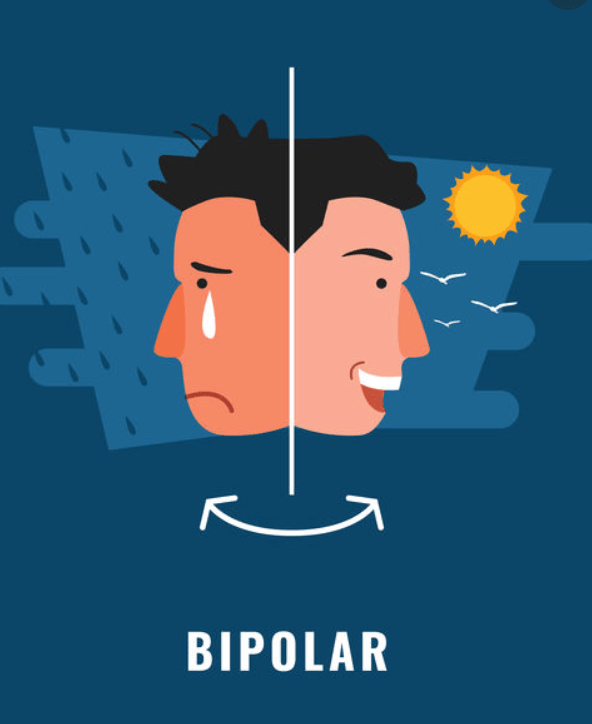
‘Bipolar disorder is characterised by extreme mood swings. These can range from extreme highs (mania) to extreme lows (depression)’ – https://www.nhs.uk/conditions/bipolar-disorder/symptoms/
Switching from lows to highs must feel confusing, and also causes problems for people around you as they never know how you’re going to act. It is so important to look out for the signs that this is occurring because they will impact yourself or someone you know drastically and cause peoples lives to be ruined.
These are symptoms found on the NHS website for Bipolar of both depression and mania which someone may experience when they have Bipolar: ( https://www.nhs.uk/conditions/bipolar-disorder/symptoms/)
Depression
During a period of depression, your symptoms may include:
- feeling sad, hopeless or irritable most of the time
- lacking energy
- difficulty concentrating and remembering things
- loss of interest in everyday activities
- feelings of emptiness or worthlessness
- feelings of guilt and despair
- feeling pessimistic about everything
- self-doubt
- being delusional, having hallucinations and disturbed or illogical thinking
- lack of appetite
- difficulty sleeping
- waking up early
- suicidal thoughts
Mania
The manic phase of bipolar disorder may include:
- feeling very happy, elated or overjoyed
- talking very quickly
- feeling full of energy
- feeling self-important
- feeling full of great new ideas and having important plans
- being easily distracted
- being easily irritated or agitated
- being delusional, having hallucinations and disturbed or illogical thinking
- not feeling like sleeping
- not eating
- doing things that often have disastrous consequences – such as spending large sums of money on expensive and sometimes unaffordable items
- making decisions or saying things that are out of character and that others see as being risky or harmful
If you think you or someone you know is experiencing any of these symptoms you need to contact the NHS on 111 and seek guidance on how to handle this disorder.
Bipolar will effect everyday life, as after a low episode the person experiencing it won’t understand their own behaviour, as when they’re in the episode they react differently and therefore think differently too. Working with bipolar is a big struggle and people with the disorder may find it hard keeping a job, as in a work environment finding a way to control the episodes is nearly impossible. Relationships with friends and family or girlfriends/boyfriends etc may be strained due to these episodes and not being able to control them.
BipolarUK – ( https://www.bipolaruk.org/faqs/bipolar-the-facts ) says that ‘1% to 2% of the population experience a lifetime prevalence of bipolar and recent research suggests as many as 5% of us are on the bipolar spectrum’ which doesn’t seem a lot, but the people who are effected by it are effected badly and their lives change completely. They also say ‘Bipolar increases the risk of suicide by 20 times’ which is why it is so important that if you think you have these symptoms you need to seek medical guidance in order to make sure you don’t become depressed due to this and then harm yourself or others in an episode.
These are numbers and emails you can contact in order to find help
BipolarUK Helpline
Samaritans helpline – 116 123
samaritans.org
Freepost RSRB-KKBY-CYJK
PO Box 90 90
Stirling FK8 2SA
jo@samaritans.org
They provide 24-hour support for anyone struggling who needs to talk.
Below is a quote from famous writer,actor and comedian Stephen Fry who suffers from Bipolar and how he sees bipolar : (https://www.goodreads.com/quotes/7570063-i-ve-found-that-it-s-of-some-help-to-think-of)
 Mental Health Awarness Blog